AGENTS.md Template for Spring Boot Microservices
An AGENTS.md for one service in a Spring Boot microservices system. It teaches your AI agent the rules that keep services independent.
# Payment Service

Microservice that authorizes and captures payments for orders.

## Tech stack

- Java 25
- Spring Boot 4
- Maven

## Commands

- Build: `./mvnw clean verify`
- Run locally: `./mvnw spring-boot:run`
- Run all tests: `./mvnw test`
- Run one test: `./mvnw test -Dtest=OrderServiceTest`

## Architecture

- Each service owns its data. Never read or write another service's database.
- Services talk through documented APIs (OpenAPI) or events.
- Public API changes must be backward compatible; breaking changes need a new version.
- Every call to another service has a timeout and handles failure.

## Code style

- Use constructor injection. Never use field injection with `@Autowired`.
- Use records for DTOs. Never return JPA entities from controllers.
- Validate request bodies with Bean Validation (`@Valid`) and map errors in one `@RestControllerAdvice`.
- Use `java.time` types, never `java.util.Date`.
- Return `Optional` for values that can be absent; never use it for fields or parameters.
- Log with SLF4J. Never use `System.out.println`.

## Testing

- JUnit and AssertJ for all tests; Mockito for unit tests.
- Use test slices (`@WebMvcTest`, `@DataJpaTest`) instead of `@SpringBootTest` when one layer is enough.
- Integration tests run against a real database with Testcontainers, not H2.

## Working rules

- Every change comes with new or updated tests.
- Run the build and the tests before saying a task is done. If they fail, fix them or report the failure; never hide it.
- Write complete code. No placeholders such as `// rest of the code unchanged` or `TODO: implement`.
- Keep changes focused on the task. Don't refactor, rename or reformat unrelated code.
- Ask before adding a new dependency.
- Never commit secrets, API keys or passwords. Read them from environment variables.
- Don't commit or push unless asked.

## Project notes

- The API contract is `src/main/resources/openapi.yaml`. Change the contract first, then the code.
- Calls to other services use the shared `RestClient` beans, which have timeouts configured. Never create a client inline.
- Events are published to Kafka topics named `<service>.<entity>.<event>`, for example `payments.payment.captured`.
Want different commands, rules or file names? Customize this template in the generator →
In a microservices system, an agent working on one service can’t see the others, so it doesn’t know that a renamed JSON field breaks three consumers or that reading another service’s table creates a hidden dependency. This template writes those system-level rules into the service’s own repository.
Why These Rules
- Each service owns its data. Sharing a database is the fastest way to turn microservices into a distributed monolith. An agent asked for “the customer’s address” will happily join another service’s table unless the rule says no.
- Backward-compatible API changes. Adding a field is safe; renaming or removing one breaks clients you can’t see. The rule makes the agent add instead of change, and version real breaking changes.
- A timeout on every call. A call without a timeout can block threads until the whole service hangs. Pointing the agent at preconfigured
RestClientbeans is simpler than explaining timeouts in every task. See how a REST client handles 503 errors. - Contract first. When the OpenAPI file changes first, the change is reviewed as an API change, not hidden in a code diff. More in Designing APIs with Swagger and OpenAPI.
- Topic naming. One naming pattern, written down, means the agent creates
payments.payment.capturedinstead of inventing a new style.
Adapt It to Your Project
- Replace the service name and summary in each repository. An agent that knows “this is the payment service” makes better decisions about what belongs there.
- Name the services this one talks to in the notes, and how: REST, events or both.
- Add your resilience rules, such as retries only for idempotent calls, or a circuit breaker library you use.
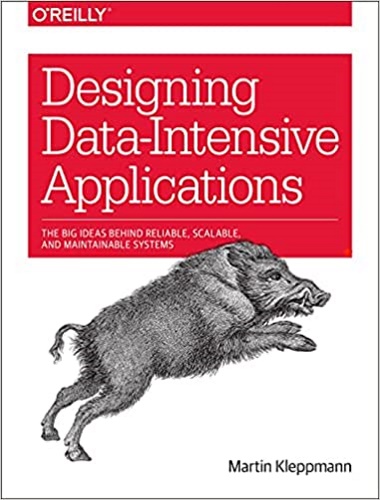
The hardest microservices questions, such as who owns the data, how services stay consistent and what happens when a call fails, are data questions. Designing Data-Intensive Applications by Martin Kleppmann is the book that answers them, and it will make your agent rules much sharper: