CLAUDE.md Template for Domain-Driven Design with Spring Boot
A CLAUDE.md for a Spring Boot service designed with Domain-Driven Design. It keeps your AI agent from mixing bounded contexts and from changing aggregates behind their backs.
# Booking Service

Service that manages hotel room bookings: availability, pricing and cancellations.

## Tech stack

- Java 25
- Spring Boot 4
- Maven

## Commands

- Build: `./mvnw clean verify`
- Run locally: `./mvnw spring-boot:run`
- Run all tests: `./mvnw test`
- Run one test: `./mvnw test -Dtest=OrderServiceTest`

## Architecture

- Code is organized by bounded context, not by technical layer.
- An aggregate protects its invariants: change its state only through its own methods.
- Aggregates reference other aggregates by ID, never by object reference.
- Value objects are immutable and validate themselves on creation.
- Use the domain's ubiquitous language for class and method names.
- Side effects in other aggregates happen through domain events.

## Code style

- Use constructor injection. Never use field injection with `@Autowired`.
- Use records for DTOs. Never return JPA entities from controllers.
- Validate request bodies with Bean Validation (`@Valid`) and map errors in one `@RestControllerAdvice`.
- Use `java.time` types, never `java.util.Date`.
- Return `Optional` for values that can be absent; never use it for fields or parameters.
- Log with SLF4J. Never use `System.out.println`.

## Testing

- JUnit and AssertJ for all tests; Mockito for unit tests.
- Use test slices (`@WebMvcTest`, `@DataJpaTest`) instead of `@SpringBootTest` when one layer is enough.
- Integration tests run against a real database with Testcontainers, not H2.

## Working rules

- Every change comes with new or updated tests.
- Write a failing test first, then the code that makes it pass.
- Run the build and the tests before saying a task is done. If they fail, fix them or report the failure; never hide it.
- Write complete code. No placeholders such as `// rest of the code unchanged` or `TODO: implement`.
- Keep changes focused on the task. Don't refactor, rename or reformat unrelated code.
- Ask before adding a new dependency.
- For changes that touch more than a few files, explain the plan and wait for approval.
- Never commit secrets, API keys or passwords. Read them from environment variables.
- Don't commit or push unless asked.

## Project notes

- Bounded contexts are top-level packages: `com.example.booking.reservation`, `com.example.booking.pricing`, `com.example.booking.availability`.
- Contexts talk to each other only through their `api` package or through domain events, never through each other's internal classes.
- Repositories exist only for aggregate roots, for example `ReservationRepository`, never for the entities inside an aggregate.
- Use the terms in `docs/glossary.md`. Ask before introducing a new domain term.
Want different commands, rules or file names? Customize this template in the generator →
Domain-Driven Design lives in details that a compiler can’t check: which class is an aggregate root, which terms the business uses, which context owns a rule. An AI agent sees only code, so it takes the shortest path: it sets a field from a service, calls another context’s repository, or names a class BookingManager. This template writes the design down where the agent reads it.
Why These Rules
- Organized by bounded context. Packages like
reservationandpricingtell the agent where a change belongs. Technical packages likeserviceandrepositorydon’t. - Aggregates protect their invariants. “A reservation can’t be cancelled after check-in” belongs in
Reservation.cancel(), not in a service that setsstatusdirectly. Without the rule, agents add setters because they are the quickest fix. - References by ID. An aggregate that holds another aggregate as an object reference ends up loading, locking and saving both. Holding
RoomIdinstead keeps transactions small. - Value objects validate themselves. A
DateRangethat rejects an end before its start removes that check from every caller. Java records make value objects short enough that the agent has no excuse not to use them. - The glossary. The ubiquitous language works only if code uses the same words as the business. Pointing the agent at a glossary is the simplest way to keep
Guestfrom becomingCustomer,UserandClientin three files. - Plan first, test first. Domain changes often touch several aggregates. Explaining the plan before coding lets you catch a wrong model early, and a failing test shows the rule is really enforced.
Adapt It to Your Project
- Replace the contexts with yours, and say in the notes which context owns which concept when two of them use the same word.
- Write the glossary. Even ten terms with one-line definitions help both the agent and new teammates.
- Combining DDD with ports and adapters? The hexagonal architecture template has the layering rules inside each context.
- Using Gradle or another file name? Change it in the generator.
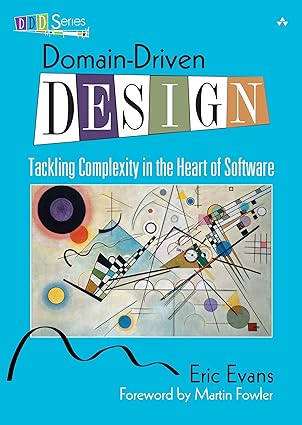
Aggregates, value objects, bounded contexts and the ubiquitous language all come from one book. Eric Evans’ Domain-Driven Design explains when each pattern helps and when it doesn’t, which is exactly what you need to decide which rules your agent should follow: