
Functional Programming in Java: Lambdas, Streams, Records and Immutability
You already use functional programming in Java every time you write a lambda or a stream. Used well, it turns a 20-line loop over orders into five readable lines. Used carelessly, it hides bugs. Here are the core ideas, with examples from real business code.
Functional programming treats computation as the evaluation of functions and avoids changing state and mutable data. Java is an object-oriented language, but since Java 8 it has added lambdas, streams and, more recently, records, which make a functional style practical.
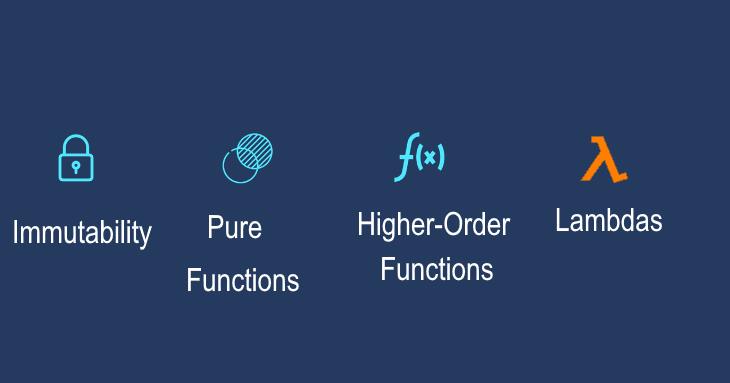
Key Concepts of Functional Programming
1. Immutability
In functional programming, data doesn’t change after it’s created. That removes a whole class of bugs: no other part of the program can modify your data behind your back.
A common misunderstanding is that the final keyword makes data immutable. It doesn’t: final only stops a variable from being reassigned.
1
2
3
4
5
final int immutableValue = 42;
immutableValue = 24;               // does not compile: cannot assign a value to final variable

final List<String> names = new ArrayList<>();
names.add("Ana");                  // compiles and runs: the list itself can still change
For data that really can’t change, use unmodifiable collections and records:
1
2
3
4
List<String> fixed = List.of("Ana", "Ben");
fixed.add("Carl");                 // throws UnsupportedOperationException

record Order(String customer, String status, double amount) { }   // Java 16+
A record is an immutable data class: its fields are final, and Java generates the constructor, accessors (order.customer()), equals, hashCode and toString for you.
2. Pure Functions
A pure function’s output depends only on its input, and it has no side effects: it doesn’t change anything outside itself. For the same input it always returns the same output, which makes it easy to understand and to test.
1
2
3
4
// Pure function
int add(int a, int b) {
    return a + b;
}
3. First-Class and Higher-Order Functions
In functional programming, functions are first-class citizens: you can store them in variables, pass them as arguments and return them from methods. Java does this with the functional interfaces in java.util.function, such as Function, Predicate and Consumer.
A higher-order function takes a function as an argument or returns one. Here, twice takes a function and returns a new function that applies it two times:
1
2
3
4
5
6
7
Function<Integer, Integer> square = x -> x * x;   // a function stored in a variable

static <T> Function<T, T> twice(Function<T, T> f) {
    return f.andThen(f);                            // returns a new function
}

int result = twice(square).apply(2);                // square(square(2)) = 16
4. Lambda Expressions and Method References
Lambda expressions are a concise way to implement a functional interface (an interface with a single abstract method), using the syntax (parameters) -> expression. When a lambda only calls an existing method, a method reference is even shorter:
1
2
3
4
5
6
7
List<Integer> numbers = Arrays.asList(1, 2, 3, 4, 5);

// Using a lambda expression
numbers.forEach(number -> System.out.println(number));

// Using a method reference
numbers.forEach(System.out::println);
5. Streams
The Stream API performs functional-style operations on sequences of elements, such as filtering, mapping and reducing:
1
2
3
4
5
6
7
List<Integer> numbers = Arrays.asList(1, 2, 3, 4, 5);

// Using the Stream API to filter and sum
int sum = numbers.stream()
                 .filter(n -> n % 2 == 0)
                 .mapToInt(Integer::intValue)
                 .sum();                     // 2 + 4 = 6
A Real Example: Summing Orders
Numbers make the syntax clear, but streams pay off on business data. Given a list of orders, we want the total amount of shipped orders per customer:
1
2
3
4
5
6
7
8
9
10
11
List<Order> orders = List.of(
    new Order("ACME", "SHIPPED", 120.0),
    new Order("Globex", "OPEN", 80.0),
    new Order("ACME", "SHIPPED", 30.5),
    new Order("Initech", "SHIPPED", 200.0),
    new Order("Globex", "SHIPPED", 45.0));

Map<String, Double> shippedByCustomer = orders.stream()
    .filter(o -> o.status().equals("SHIPPED"))
    .collect(Collectors.groupingBy(Order::customer, TreeMap::new,
             Collectors.summingDouble(Order::amount)));
1
{ACME=150.5, Globex=45.0, Initech=200.0}
The stream reads like the requirement: keep the shipped orders, group them by customer, sum the amounts. Here is the same logic as a loop, which gives the same result:
1
2
3
4
5
6
Map<String, Double> totals = new TreeMap<>();
for (Order o : orders) {
  if (o.status().equals("SHIPPED")) {
    totals.merge(o.customer(), o.amount(), Double::sum);
  }
}
Both versions are correct. The stream version states what you want; the loop spells out how to do it, step by step.
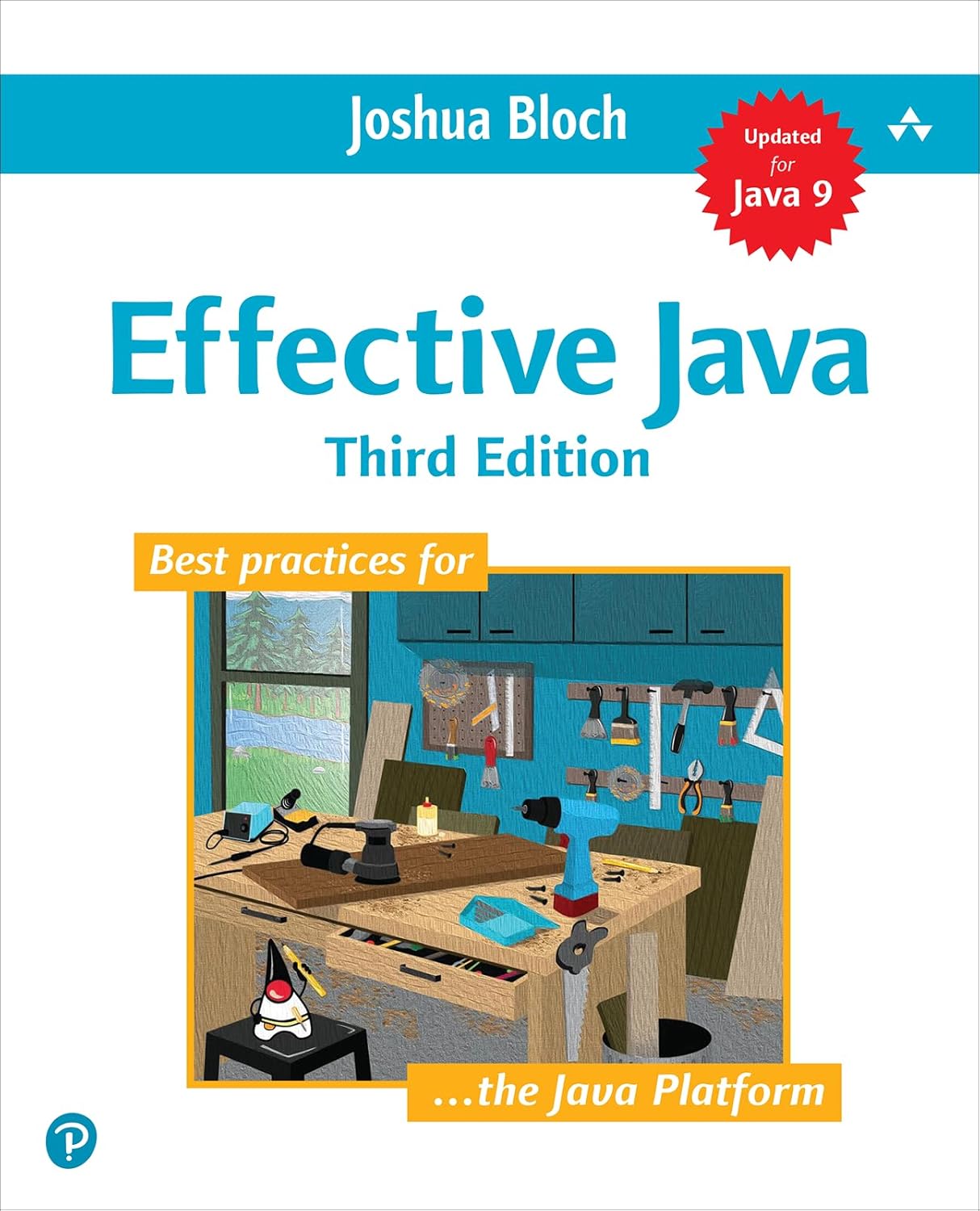
Want to know when to use streams, and when a plain loop is better? Effective Java has a whole chapter on lambdas and streams:
Benefits of Functional Programming
1. Readability and Conciseness
A declarative style describes the result you want instead of the steps to get there, as the orders example shows. The code is shorter and closer to the business requirement.
2. Parallelism and Concurrency
Immutable data and the absence of shared state make code easier to reason about when several threads run it, and the Stream API can run some operations in parallel.
3. Fewer Bugs from Side Effects
Pure functions and immutable data can’t be changed by other parts of the program, so their behavior is predictable.
4. Testability
A pure function needs no setup and no mocks: call it with an input and check the output.
Common Pitfalls
- Side effects inside lambdas. Adding to an outside list in
forEachormapworks in a simple sequential stream but breaks withparallel(). Collect the result instead:numbers.stream().filter(n -> n % 2 == 0).toList()returns[2, 4]. parallel()is not free. Splitting the work and merging the results has a cost. For small collections or cheap operations, a parallel stream is often slower. Measure before you use it.- A stream can be used only once. Calling a second terminal operation on the same stream throws
IllegalStateException: stream has already been operated upon or closed.
Not all problems are well suited for a functional approach. Often a mix of functional and object-oriented programming is the most pragmatic solution.
Key Takeaways
finalprevents reassignment;List.ofand records give you real immutability.- Pure functions depend only on their input and change nothing else.
- Lambdas and method references let you pass behavior as a value.
- Streams turn “filter, group, sum” requirements into code that reads like the requirement.
- Avoid side effects in lambdas, measure before using
parallel(), and never reuse a stream.
Every example in this post compiles and runs as shown with Java 17.
Streams and lambdas come up in almost every Java interview: rewrite this loop as a stream, explain what a pure function is. Practice with real questions:
“If this article helped you, help me create the next one.”
☕ Buy me a coffee