
Startup Ideas for Software Developers: How to Find, Validate and Build One
Most side projects built by developers don’t fail because of the code. They fail because nobody wanted to pay for them. The code was clean, the tests were green, and the only users were the developer and two friends. This post is about picking the right thing to build: eight startup ideas that suit software developers, and how to validate one before you write a single line of code.
Eight Startup Ideas That Suit Developers
1. A niche B2B tool that replaces a spreadsheet. Many small businesses still run critical work in Excel files and email. Look for one painful spreadsheet in one industry. Example: shift planning for small restaurants, where the manager today juggles a shared spreadsheet and WhatsApp messages every week.
2. A paid API. If you can collect useful data or perform a calculation reliably, other companies will pay to call it instead of building it themselves. Example: an API that shares food allergen data with restaurant apps, like the B2B ordering API in this REST tutorial, or a finance API that calculates interest and loan costs for other applications.
3. An integration between two tools. Businesses already pay for their CRM, their shop and their accounting software, and these tools rarely talk to each other. Example: a connector that copies new online-shop orders into the accounting software every night, so nobody types them in by hand.
4. A developer tool. You know developers’ pain from your own work. Example: a CLI, an IDE plugin, or an open-source library with a paid pro version that adds team features or support.
5. A productized service. A service with a fixed scope, a fixed price and a fixed delivery time. It earns money from the first week and shows you which parts are worth automating later. Example: “Complete OpenAPI documentation for your existing API in 5 days, for a fixed price.”
6. A book or a course about what you know. Years of solving real problems are worth something to people who face those problems now. That’s what I did: I turned what I learned in years of software development into my books, The Code Interview and Software Design Principles, which readers buy on Amazon. Write once, and the book keeps selling while you work on the next thing.
7. A micro-SaaS for a community you belong to. Your hobby, your sports club or your industry has problems that big companies ignore because the market is too small for them, but it’s big enough for one developer. Example: a booking tool for the courts of a local tennis club, which today run on a paper list.
8. Automate a boring manual workflow. Look for work that people do by copying, pasting and checking. Example: reading supplier invoices and filling in the purchasing system. A word of caution about AI: a thin wrapper around a public AI model is easy to copy, by competitors and by the model’s own vendor. Your advantage has to come from knowing the workflow, the data or the customers.
Validate Before You Write Code
An idea is a guess. Before you spend months on it, test the guess in five steps:
- Talk to 10 potential customers. Don’t pitch. Ask how they solve the problem today, what it costs them, and what they’ve already tried. If nobody is bothered enough to talk to you, that’s your answer.
- Find where they already spend money. People who already pay for a bad solution, in money or in hours, are your best customers. A problem nobody spends anything on is usually not painful enough.
- Put up a landing page. Describe the product, show a price, and ask for a pre-order or an email address. Ten people who sign up tell you more than a hundred who say “nice idea”.
- Treat competitors as proof. Competitors mean the market exists. Your job is to serve one group of customers better, not to find an idea that nobody has ever had.
- Set a price on day one. A price is part of the test. “Would you pay 20 euros a month for this?” gets an honest answer; “Would you use this?” doesn’t.
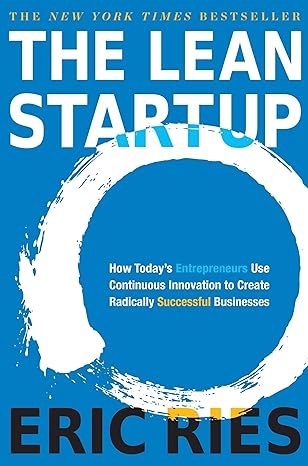
This build-measure-learn loop, with small experiments instead of big launches, is the core of the book that made the method famous:
Most startups fail. But many of those failures are preventable. The Lean Startup is a new approach being adopted across the globe, changing the way companies are built and new products are launched. – The Lean Startup
Build the MVP Like a Developer Who Ships
A minimum viable product (MVP) is the smallest version of your product that real customers can use and pay for.
- Build only what the customers asked for. Every feature you add before launch delays the moment you learn something.
- Use technology you already know. A startup is not the place to learn a new framework. Boring, familiar technology lets you ship in weeks.
- Design the API first. If your product has an API, write the contract before the code. It forces you to decide what the product does. See Design-First APIs with OpenAPI 3.
- Break the work into small tasks. A vague goal like “build the app” never ships. Break the project into user stories and tasks you can finish in a day or two.
Five Mistakes Developers Make
- Building in secret for months. Show the product early, even when it embarrasses you. Feedback in week two is worth more than polish in month six.
- Overengineering. You don’t need microservices, Kubernetes and an event bus for your first 10 users. A single application and a database will take you much further than you think.
- No price. “Free for now” attracts users who never pay. Charge from the start, even if it’s a small amount.
- No marketing. Customers won’t find you on their own. Plan to spend as much time telling people about the product as building it.
- Choosing the idea because of the technology. “I want to build something with Kafka” is not a business. Start from the problem, then pick the technology.
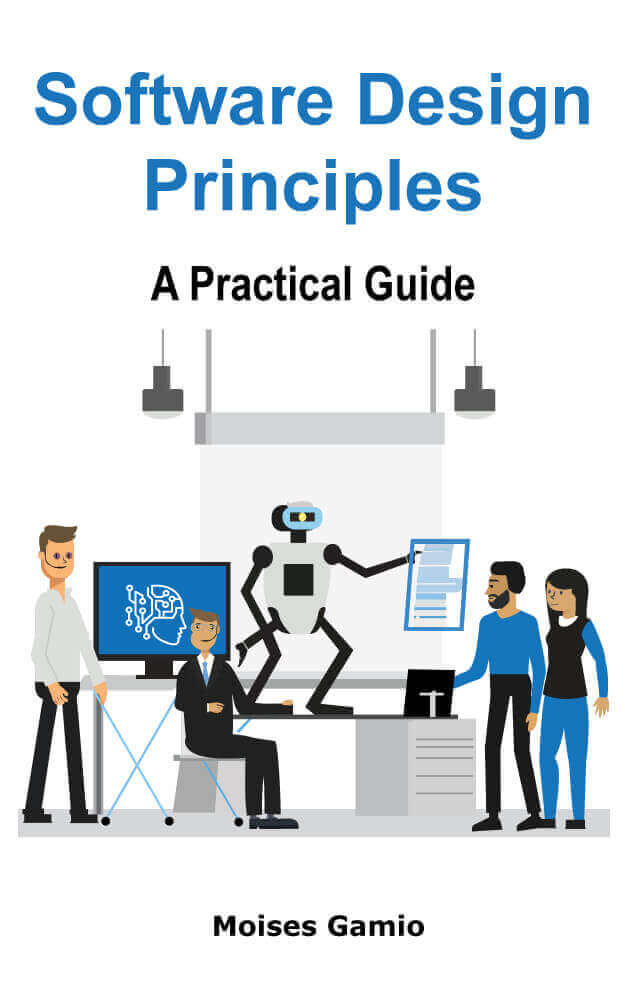
Once customers pay and start asking for new features, the quality of your code decides how fast you can deliver them. A design that’s easy to change is what lets a small product grow without a rewrite:
Software design principles provide guidelines to handle the design process’s complexity, prepare your code when changes arise, and minimize the impact of introducing bugs. – Software Design Principles
Checklist Before You Start
- Can you describe the problem and the customer in one sentence?
- Have you talked to at least 10 potential customers?
- Do they already spend money or time on the problem?
- Did people sign up or pre-order on your landing page?
- Do you have a price?
- Can you ship the first version in weeks, with technology you know?
If you can answer “yes” to most of these, start building.
Please support me as a writer. Every contribution helps, and your donation can help add more articles to this website, no matter how small. Thank you!