Software is malleable.
Build it to bend, not break.
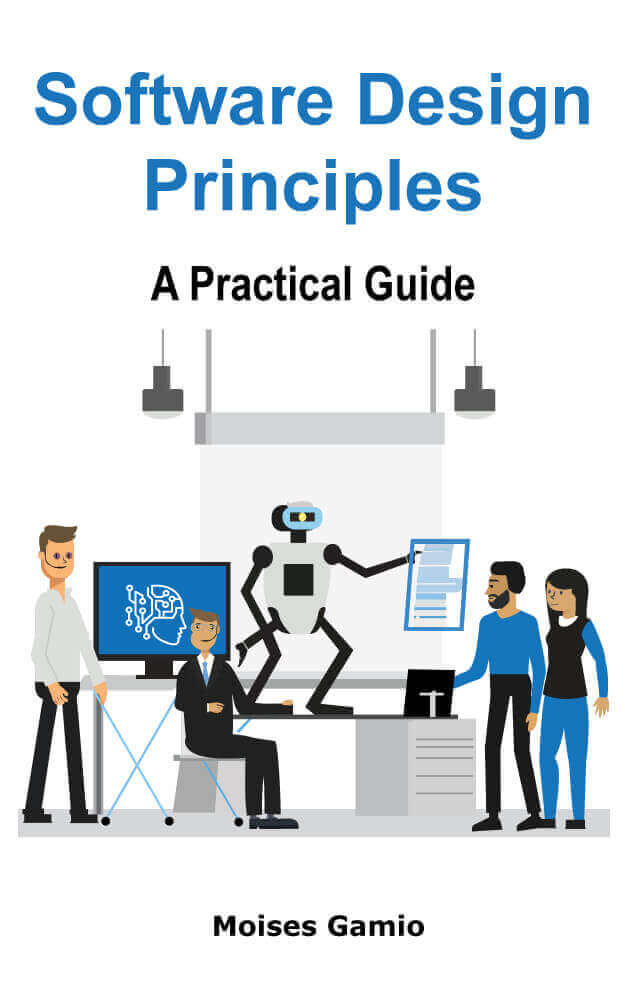
Twenty-five years across banking, government, retail and B2B systems taught the author one lesson: every unmaintainable codebase started as somebody's fast, obvious shortcut. Software Design Principles hands you the antidote — OOP foundations, SOLID, UML fluency and clean-code habits that keep software bending instead of breaking as requirements change.
Six ways of thinking. One fluent engineer.
Each chapter trades vague advice for concrete, worked examples — the kind you can apply in your codebase before lunch.
Think like an architect, not a typist
Classes, objects, encapsulation, inheritance, polymorphism and abstraction — translated straight from business requirements into a working object model.
Say no to wasted code
Spot duplication before it calcifies, resist the urge to over-engineer, and build only what the requirement actually asks for.
Wire classes that don't break each other
All five SOLID principles, each with a worked code example and a Key Takeaways recap you can pin above your desk.
Draw the system before you build it
Class notation plus all six relationship types — association, aggregation, composition, dependency, inheritance and realization.
Write code your team won't curse
Twelve field-tested habits, from intention-revealing names to knowing exactly when a comment is actually necessary.
Apply it to real systems
Interpret a functional spec, design a RESTful API, and architect a B2B integration project — start to finish.
Eight sheets. One blueprint.
The full table of contents — no padding, no filler chapters.
Read before you buy.
Software design is everything related to managing interdependencies between different software components.— From the Introduction
Get a free excerpt, no signup
Download a free PDF sample straight from the opening chapters and see exactly how the book explains, and code, each principle before you commit to the full edition.
Wherever you are in the stack, this meets you there.
Whether you're just starting your journey in software design or deepening expertise you already have — the principles hold either way.
Endorsed beyond software engineering.
Currently there is a lot of attention on Artificial Intelligence & Data Science. At the end of the day those fields stand on software engineering best practices & patterns. This book will be a ideal fit for AI & DS practitioners to learn & enforce software engineering to build mature AI/DS solutions.

Written from the field, not the whiteboard.

Be ready to negotiate your next salary.
Good design is the foundation of great software — and the engineers who understand it are the ones who get to be picky about where they work next.
Buy Software Design Principles on Amazon